
See the Northern Lights in West Iceland

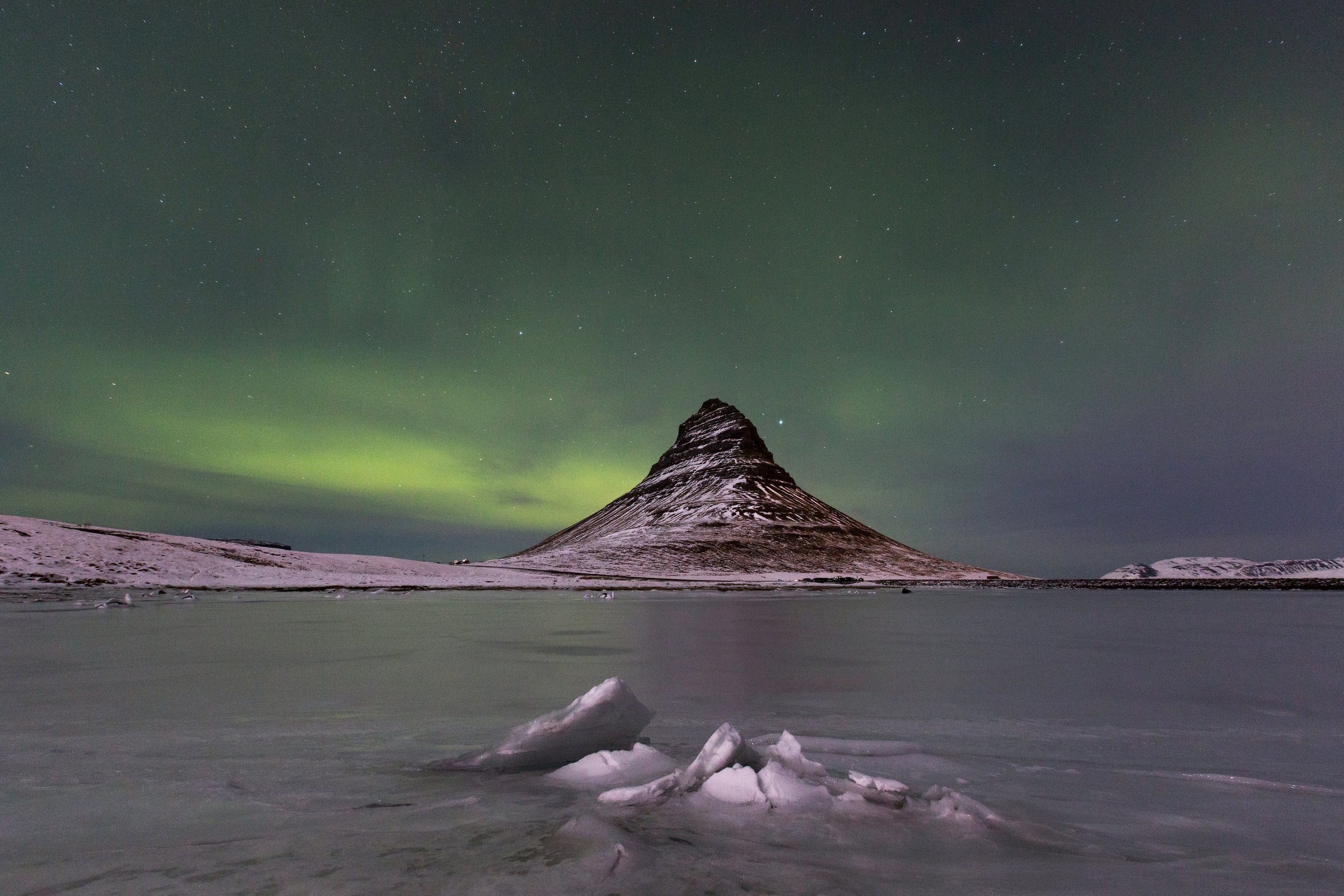
Kirkjufell – Grundarfjörður
Kirkjufell is one of the most iconic places in Iceland to experience the Northern Lights. Rising dramatically beside the sea, the distinctive mountain creates a spectacular silhouette beneath the dancing aurora. Nearby Kirkjufellsfoss adds flowing water and reflections, creating an unforgettable natural setting. On clear, dark nights, the combination of mountain, waterfall and colourful skies is truly magical. Located just outside Grundarfjörður, Kirkjufell offers one of the most recognisable and photogenic Northern Lights experiences in West Iceland.
Snæfellsjökull & Djúpalónssandur – Snæfellsbær
Experience the Northern Lights beneath the majestic Snæfellsjökull, one of West Iceland’s most iconic landmarks. Nearby Djúpalónssandur offers a dramatic setting of black pebbles, rugged lava formations and the wild Atlantic Ocean. Far from major towns and artificial lights, the area provides dark skies and an atmospheric backdrop for the aurora. The combination of glacier, volcanic landscapes and coastline makes this one of the most memorable places to experience the Northern Lights in West Iceland.
Borgarnes – Borgarbyggð
Chase the Northern Lights along the peaceful coastline of Borgarnes, where the waters of Borgarfjörður and surrounding mountains create a beautiful natural setting beneath the night sky. With views across the fjord, historic buildings and the distinctive silhouette of Hafnarfjall in the distance, Borgarnes offers a memorable backdrop for the aurora.
A peaceful coastal atmosphere, spectacular scenery and the possibility of witnessing the Northern Lights make Borgarnes an ideal base for exploring West Iceland after dark.
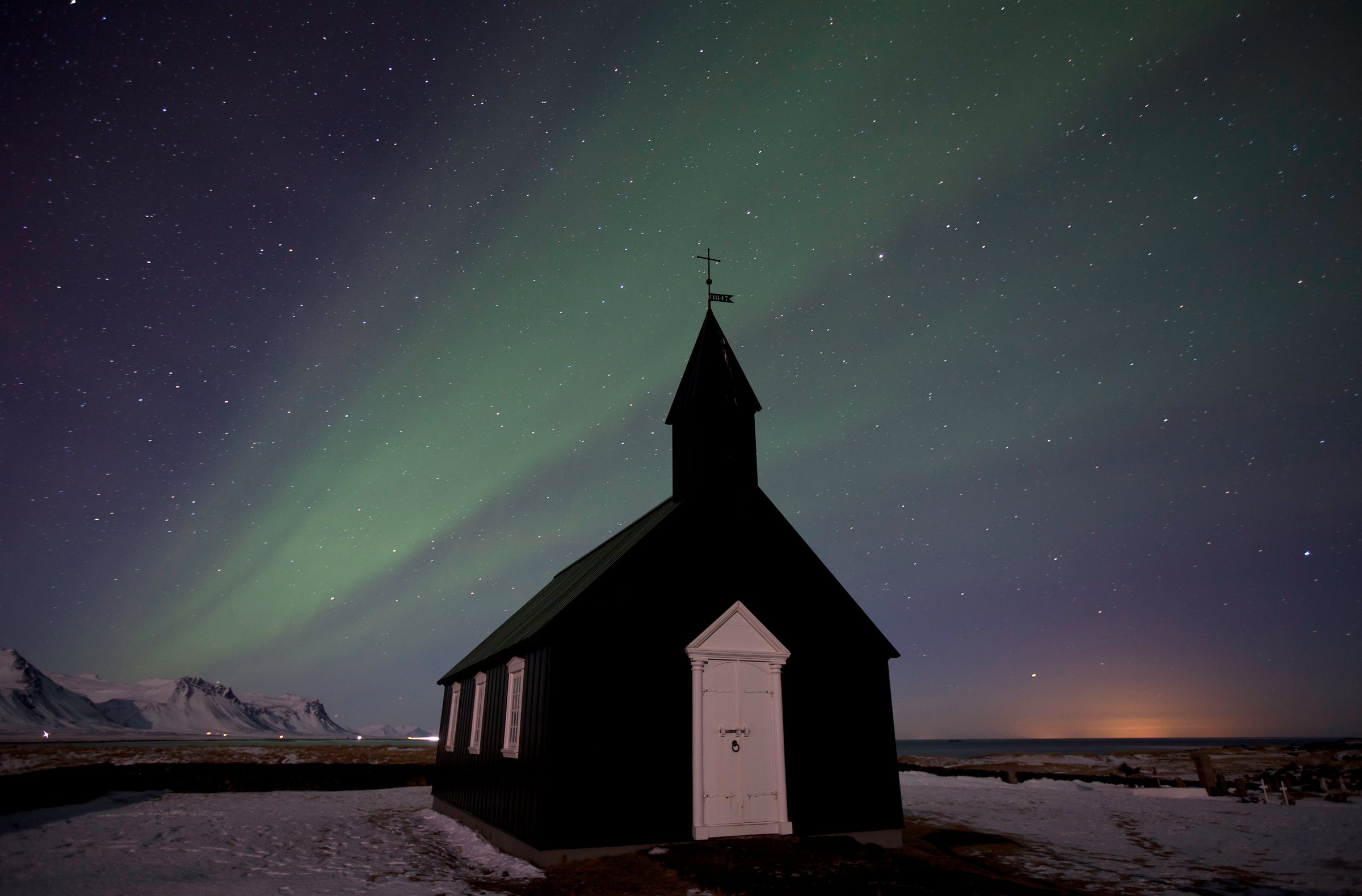
Dagverðarneskirkja – Dalabyggð
Watch the Northern Lights illuminate the sky above Dagverðarneskirkja, a charming historic church surrounded by the peaceful landscapes of Dalabyggð. Set beside Breiðafjörður, the area offers sweeping views, dramatic mountains and wide, dark skies with little light pollution. The quiet setting makes it an ideal place to experience the aurora away from busy tourist destinations. With the church, coastline and mountains creating a distinctive foreground, Dagverðarneskirkja also offers wonderful opportunities for atmospheric Northern Lights photography.
Súgandisey – Stykkishólmur
Súgandisey offers a spectacular setting for experiencing the Northern Lights in Stykkishólmur. The small rocky island and its distinctive lighthouse overlook Breiðafjörður, creating an atmospheric foreground beneath the dancing aurora. With wide views across the sea and countless islands stretching towards the horizon, the location captures the unique character of West Iceland. On clear, dark nights, the combination of the illuminated sky, ocean and rugged coastline creates a peaceful and unforgettable Northern Lights experience for visitors.
When is the best time?
The Northern Lights season generally runs from late August/September through April, when darkness returns to Iceland. September to March offers particularly favourable conditions because of the long, dark nights.
The key is not only solar activity, but also clear skies and darkness. Even a strong aurora can be hidden completely by clouds, so flexibility is essential.
Experience the magic
Whether you choose the iconic Kirkjufell, the wild coastline of Snæfellsnes, the mountains of Borgarfjörður or the peaceful landscapes of Dalabyggð, West Iceland offers plenty of opportunities to experience the Northern Lights away from the busiest tourist areas.
Look up, wait for the clouds to clear – and let West Iceland provide the backdrop.
Tips for Experiencing the Northern Lights in West Iceland
A winter visit to West Iceland offers excellent opportunities to experience the Northern Lights. With dark skies, dramatic mountains, open coastlines and peaceful countryside, the region provides many beautiful places to watch the aurora. A little preparation can greatly improve your chances.
- Check the Aurora and Weather Forecasts: Keep an eye on the aurora forecast and solar activity, but don't forget to check cloud cover. Strong auroral activity is of little use if the sky is covered by clouds.
- Stay Updated on Road Conditions: Icelandic weather can change rapidly, especially during winter. Always check weather and road conditions before setting out and be prepared to adjust your plans if necessary.
- Find Dark Skies: Move away from towns and other sources of artificial light. West Iceland has plenty of quiet countryside where the skies are naturally dark and the stars—and hopefully the aurora—can shine brightly.
- Choose a Scenic Location: One of the advantages of West Iceland is the spectacular scenery that surrounds you. Locations such as Kirkjufell, Borgarnes, Dagverðarneskirkja, Djúpalónssandur and Súgandisey offer memorable settings for an aurora experience.
- Be Patient: The Northern Lights are a natural phenomenon and cannot be scheduled. They may appear for only a few minutes or develop into a spectacular display over several hours. Give yourself time and don't give up too quickly.
- Dress for the Outdoors: Waiting for the aurora can mean spending considerable time outside. Warm layers, waterproof clothing, good boots, gloves and a hat are essential. A hot drink can also make the experience much more enjoyable.
Photographing the Northern Lights
West Iceland's combination of mountains, coastlines, lakes and wide-open landscapes provides fantastic opportunities for aurora photography.
- Bring a Tripod: Long exposures require a completely steady camera. A tripod is one of the most useful pieces of equipment you can bring.
- Use Manual Settings: With a DSLR or mirrorless camera, use manual focus and focus on a distant object or infinity. Begin with a wide aperture, a higher ISO and an exposure of around 5–15 seconds, then adjust according to the conditions.
- Choose a Wide-Angle Lens: A wide-angle lens allows you to capture both the Northern Lights and the surrounding landscape.
- Use Night Mode on Your Phone: Modern smartphones can capture impressive aurora images. Use Night Mode or a long-exposure setting and keep the phone completely still.
- Use a Timer: A two-second timer or remote shutter helps prevent camera movement when taking the photograph.
- Include the Landscape: The sky is only part of the story. Frame the aurora with a mountain, lake, coastline, lighthouse or other West Iceland landmark to create a more memorable image.