
The Hlíðartún Houses in Borgarnes – A Story of Icelandic Society Preserved in Buildings

To understand the significance of the Hlíðartún Houses, it is important to view them within the context of the major changes that transformed Icelandic society during the 19th and 20th centuries. For centuries, most Icelanders lived in traditional turf houses. Turf and stone were the principal building materials, and the country’s housing traditions were shaped by the harsh climate, limited access to building materials, and traditional farming practices.
During the 19th century, this gradually began to change. Timber houses became increasingly common, particularly in growing towns, and concrete later emerged as a major building material, transforming Icelandic architecture. These changes coincided with rapid urbanisation. Around 1890, approximately 87% of Iceland’s population lived in rural areas, but by 1923 the number of people living in towns and other urban settlements had surpassed those living in the countryside.
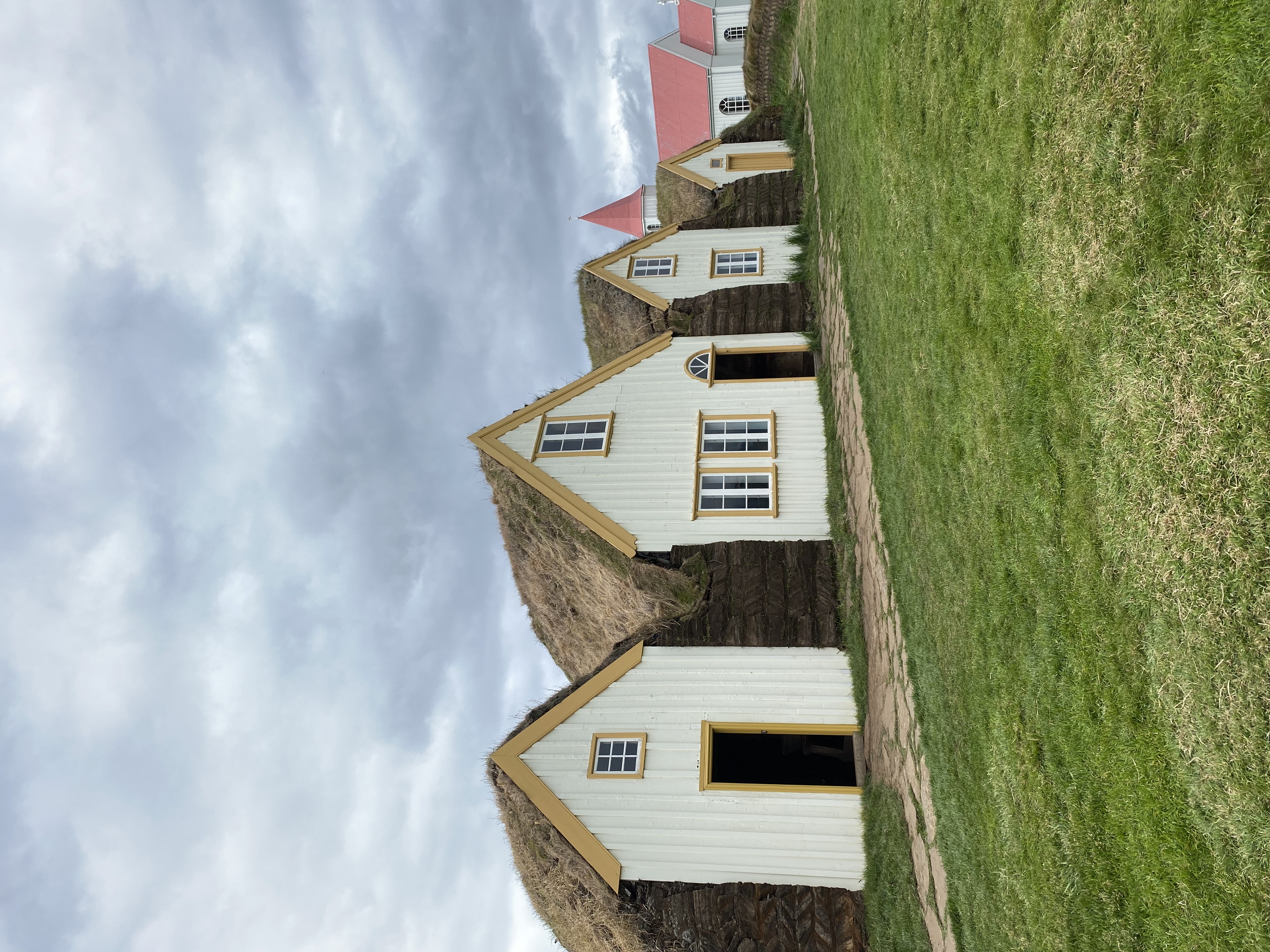
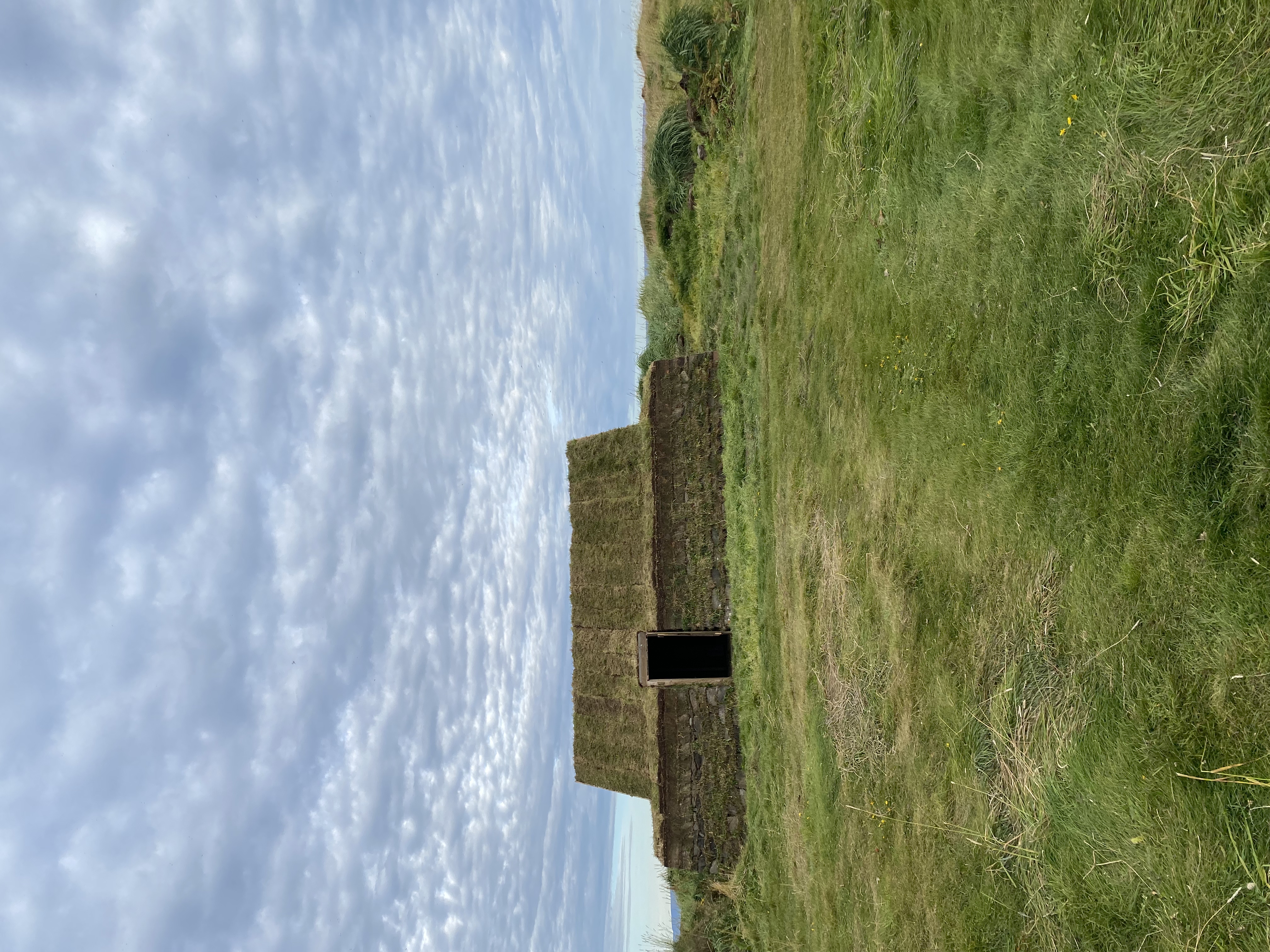
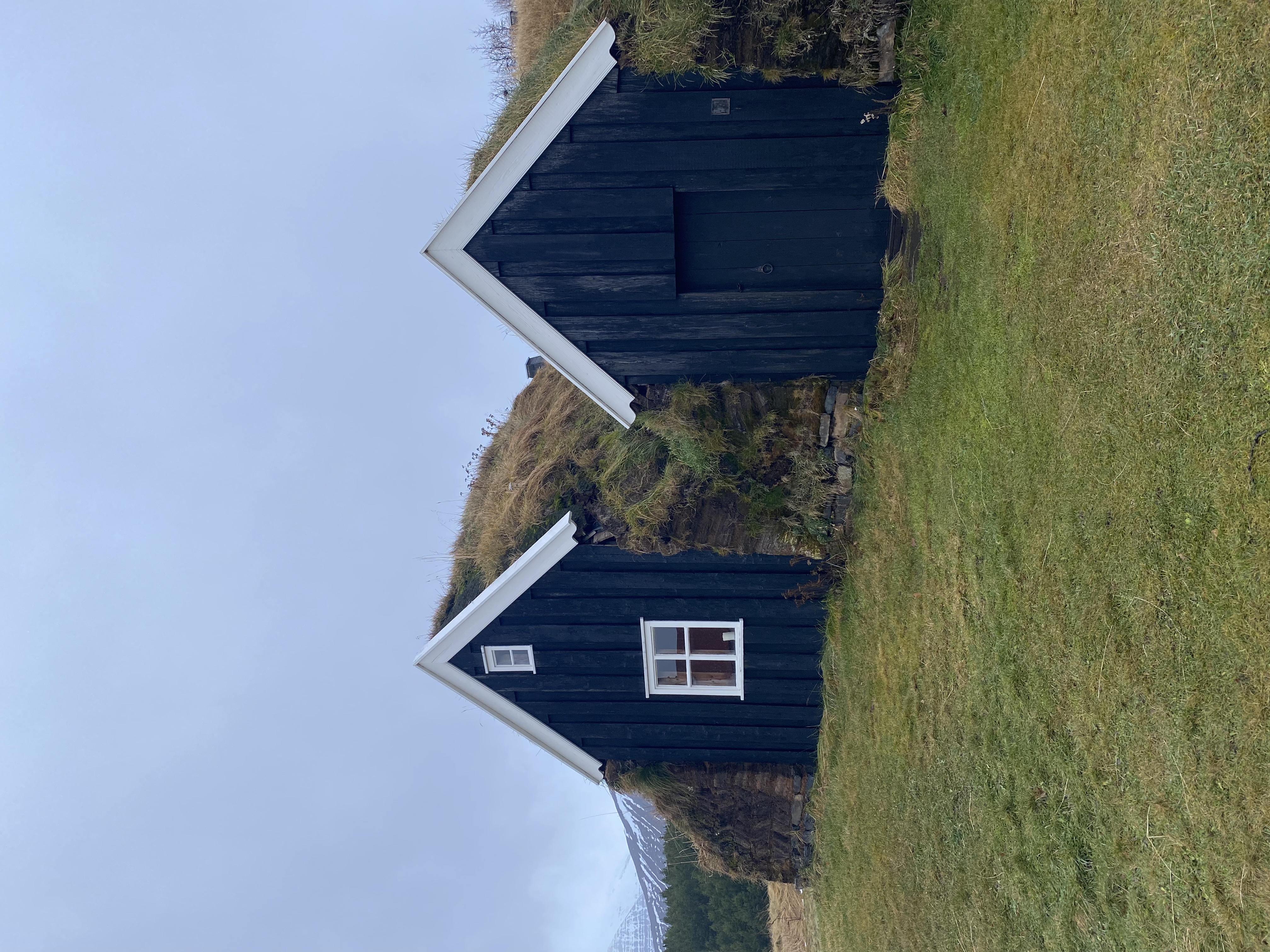
The Hlíðartún Houses emerged during precisely this period of transition. They demonstrate that farming and agriculture did not simply disappear as people increasingly moved into villages and towns. In Borgarnes, people could live in an urban environment while still having fields, livestock, a hayloft, and farm outbuildings, with farming remaining an integral part of everyday life. The houses therefore form a link between the traditional Icelandic farming community and the new urban society that was taking shape.
The outbuildings are particularly important in this context. The hayloft, which is now being reconstructed, was not merely a storage building; it was an essential part of the farming operation. It connects the site directly with the working practices of earlier generations and illustrates how the houses, fields, and agricultural buildings once functioned as one integrated environment. Looking across the fields surrounding Hlíðartún, it is easy to imagine this landscape as a place of everyday work and agricultural activity.
Since 2009, Borgarbyggð has undertaken restoration and reconstruction work on the Hlíðartún Houses with support from Iceland’s Cultural Heritage Preservation Fund, administered by the Cultural Heritage Agency of Iceland. The project is not simply about preserving old buildings; it is also about keeping the history they represent visible and accessible to future generations.
The Hlíðartún Houses are therefore much more than old buildings along Borgarbraut. They are a preserved fragment of a period when Icelandic society was gradually moving from a predominantly rural farming community towards a more modern urban society. They remind us that this transformation did not happen overnight. It took place gradually—in buildings, in fields, and in the everyday lives of ordinary people.
That is precisely why preserving the Hlíðartún Houses matters. They allow us to experience this transformation not only through historical records, but with our own eyes, in the very landscape where that history unfolded.