Swimming pools; a perfect place to connect with locals

The swimming pool culture of Iceland has been formally placed on the UNESCO list of the Intangible Cultural Heritage of Humanity.
UNESCO has strict requirements for the participation of those who know and practice the tradition, and therefore, public support for the nomination was sought. Meetings were held throughout the country where the nomination was presented and feedback was requested from attendees. Numerous swimming pool visitors and swimming groups from all over the country contributed to the nomination, shared their experiences of swimming pool culture, and expressed their support. The same applies to swimming clubs, as well as the Icelandic Swimming Association and UMFÍ (The Icelandic Youth Association).
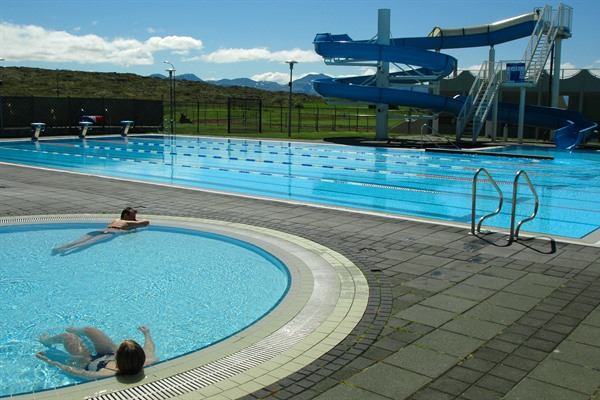
The inscription constitutes a recognition of the cultural value of swimming pool culture. The nomination emphasized swimming pools as public spaces and public goods, where all generations, people of all shapes and sizes, come together to swim, exercise, chat with friends or strangers, and enjoy community or solitude surrounded by water.
In almost every town in West Iceland, you can find swimming pools along with a wide range of geothermal baths, including Krauma, Hvammsvík and Húsafell Canyon Baths.
People of all genders, ethnicities and abilities are included in swimming pool culture in Iceland. Children learn the pool rules and customs through formal lessons and informal interactions with peers, family and staff. Youth organizations and sports clubs, as well as older pool guests, also play an important role in transmitting the tradition to younger generations. Swimming pool culture is an integral part of daily life for the practising communities. It promotes physical, mental and social well-being while offering a space for connection. It also fosters inclusion, mutual respect and cohesion among people from all walks of life.