The Homes That Built Iceland

West Iceland is home to several well-preserved turf houses and historic farmsteads that reflect a building tradition dating back to the Settlement Era and continuing into the 19th century. Many of these sites have been preserved as museums or cultural heritage attractions, allowing visitors to explore traditional architecture, everyday rural life and Iceland's rich history.
The design of turf houses evolved over the centuries. Around the 14th century, the original longhouses gradually gave way to passage houses, which were warmer and more practical, with a central hallway connecting the living spaces. In the 18th century, the iconic gabled turf house became the dominant style, with its characteristic front-facing gables overlooking the farmyard.
The size and layout of each turf house depended largely on the wealth and status of its occupants. Larger farms often featured impressive, spacious buildings, while smaller holdings were more modest. Despite their simple construction, turf houses provided excellent insulation, keeping interiors warm throughout the long Icelandic winters. Turf was abundant, inexpensive and ideally suited to local conditions, making it the primary building material in Iceland for centuries.
During the late 19th century, timber and stone buildings gradually replaced turf houses as towns expanded and new construction methods became more common. An important milestone in Icelandic architecture came in 1895, when the country's first house with cast-in-place concrete walls was built at Sveinatunga in Borgarfjörður. The building still stands today and is protected as an important part of Iceland's architectural heritage.
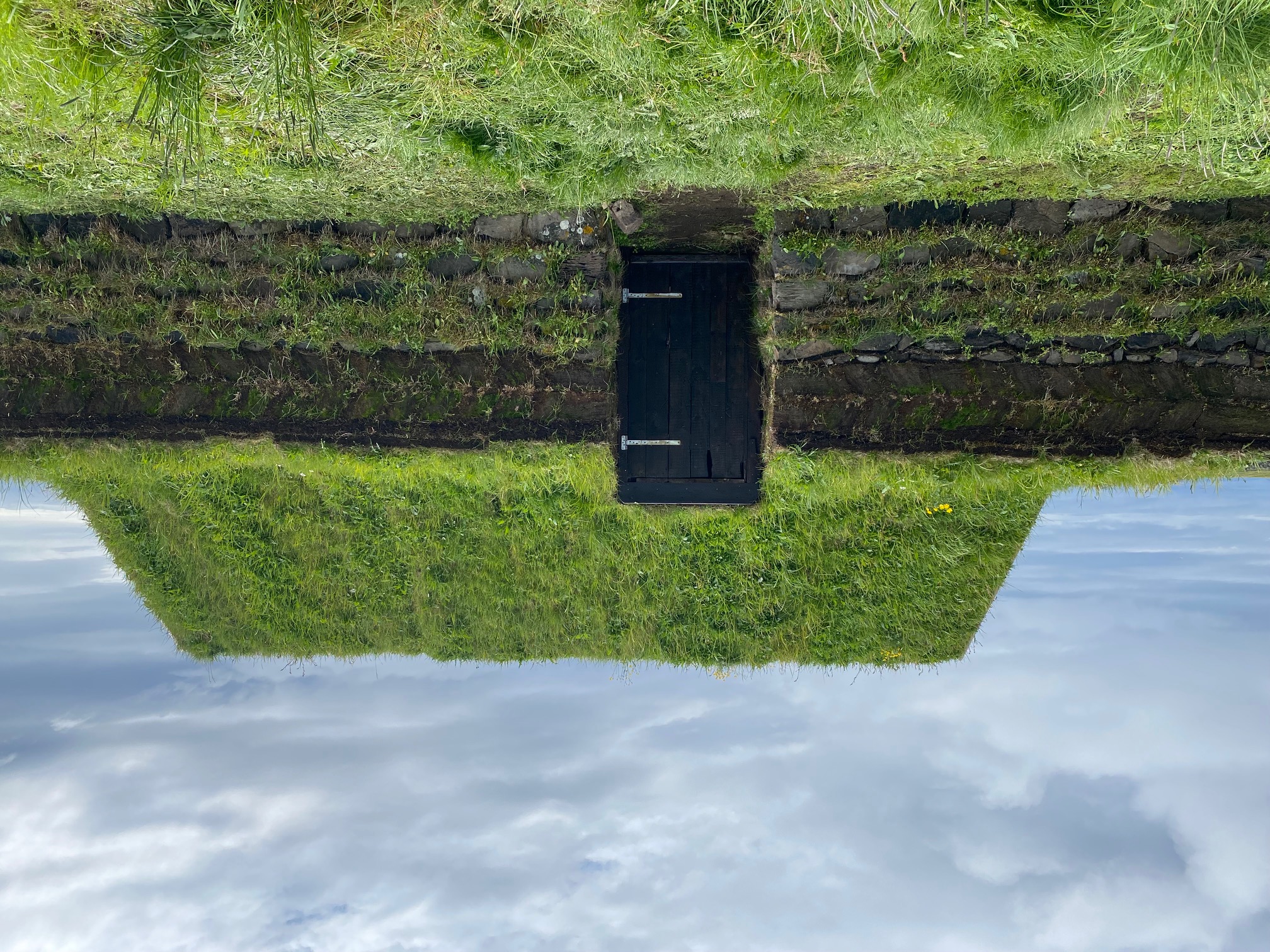
Although turf houses are no longer used as everyday homes, the traditional craft of turf building has experienced a revival in recent decades. Restoration projects, training courses and conservation efforts are helping to preserve the knowledge and craftsmanship that developed over more than a thousand years.
The cultural significance of Iceland's turf houses extends far beyond the country itself. In 2011, Iceland placed twelve turf farmsteads and two turf churches on its UNESCO World Heritage Tentative List, recognising their outstanding historical, architectural and cultural value. Today, they stand as lasting symbols of Icelandic ingenuity, sustainability and the close relationship between people and nature.